Friday, May 23, 2014

Where does Perky Prepping Gramma go shopping?

We are about ready to make another visit to a location which stocks a tremendous amount of long term storage food and equipment. See, our preparedness journey didn't start with being a "prepper". Our journey of becoming prepared actually started because we read a book called "Aftershock
Both DH and I agreed that we were very concerned about our countries economic instability; particularly living in an area where almost every single job is dependent on the government. I don't personally ascribe to their primary solution (buy gold and silver), it is a very interesting book & we do have a small percentage of our savings in precious metals.
Before I knew there was such a thing as a "prepper", by word of mouth we met this man and his wife who were vital teachers when I started to prepare. They own a brick and mortar store in the Commonwealth of Virginia and chooses to stay brick and mortar, because their true desire is to teach people how to be prepared.
They fly under the radar, that is why I am not directly sharing their information (by their personal request). If you are serious about visiting them you will need to private message me on facebook and I will help you locate them.
So, without further ado, here is a video that you won't find (at this posting 05231) everywhere. At this point it is only linked on one really old prepper site. This currently has only 751 views. 


His lovely wife who helps in the store; is the person that first showed me a jar of pressure canned chicken. That got me started on pressure canning meats.
P.S. After posting this, I realized obviously lots of you still may not be able to get to this this location. I will post tomorrow a consolidation of other ways I build my preparation storage items.
I hope you enjoyed this video. ~Perky~

Boy Scout Handbook

Boy Scout Handbook
First Edition 1911
(all illustrations are from the 1911 edition of the Boy Scout Handbook)
There was a time when people just lived sufficiency. It was just the way of life not a 
concept to learn. A time when children were simply taught how to do things that were
 important. 
I was amazed as I was skimming through this 400 plus page document. I can't begin to list everything that this covers. But here are some highlights.
From the Scout motto of "Be Prepared" (does that sound familiar?) there is a wealth of 
information. For example there is a smattering of what is required to earn various badges.
To obtain a merit badge for Agriculture a scout must  1. State different tests with grains.  2. Grow at least an acre of corn which produces 25 per cent. better than the general average.  3. Be able to identify and describe common weeds of the community and tell how best to eliminate them.  4. Be able to identify the common insects and tell how best to handle them.  5. Have a practical knowledge of plowing, cultivating, drilling, hedging, and draining.  6. Have a working knowledge of farm machinery, haymaking, reaping, loading, and stacking.  7. Have a general acquaintance of the routine seasonal work on the farm, including the care of cattle, horses, sheep, and pigs.  8. Have a knowledge of Campbell's Soil Culture principle, and a knowledge of dry farming and of irrigation farming. 
To obtain a merit badge for First Aid a scout must 1. Be able to demonstrate the Sylvester and Schaefer methods of resuscitation. 2. Carry a person down a ladder. 3. Bandage head and ankle. 4. Demonstrate treatment of wound of the neck with severe arterial hemorrhage. 5. Treat mangling injury of the leg without severe hemorrhage. 6. Demonstrate treatment for rupture of varicose veins of the leg with severe hemorrhage. 7. Show treatment for bite of finger by mad dog. 8. Demonstrate rescue of person in contact with electric wire. 9. Apply tourniquet to a principal artery. 10. State chief differences between carbolic poisoning and intoxication. 11. Explain what to do for snake bite. 12. Pass first aid test of American Red Cross Society.
To obtain a merit badge for Gardening, a scout must
1. Dig and care for during the season a piece of ground containing not less than 144 square feet.
2. Know the names of a dozen plants pointed out in an ordinary garden.
3. Understand what is meant by pruning, grafting, and manuring.
4. Plant and grow successfully six kinds of vegetables or flowers from seeds or cuttings.
5. Cut grass with scythe under supervision.
To obtain a merit badge for Poultry Farming a scout must  1. Have a knowledge of incubators, foster-mothers, sanitary fowl houses, and coops and runs.
2. Understand rearing, feeding, killing, and dressing birds for market.
3. Be able to pack birds and eggs for market.
4. Raise a brood of not less than ten chickens.
5. Report his observation and study of the hen, turkey, duck, and goose.
The information just goes on and on. I was fascinated by this Camp loom, for making mats and mattresses.
This post is written by Perky Prepping Gramma and was derived under the terms of the Project Gutenberg License online at www.gutenberg.net.
Boy Scouts Handbook
The First Edition, 1911
This entire publication is free online, to include the wonderful illustrations. I am actually taking the time and money to print this document out, which I something I don't normally do. There is so much information and will be a guideline for my learning journey for some time now. 
Then it goes into details of various skills such a knot tying, how to start a fire and even how to build a log cabin!
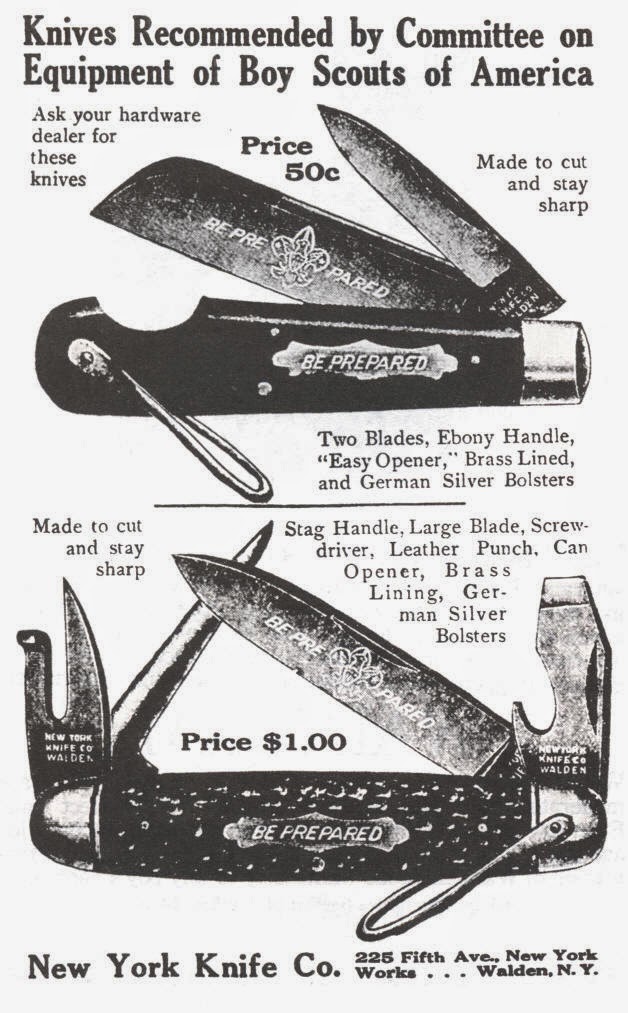
Also, for fun there are wonderful pictures of advertisements from the era for equipment 
and books. Including this first aid kit.
All in all, this FREE resource is phenomenal! I would be very curious to know who actually would consider printing the handbook out.

Wednesday, May 14, 2014

Have you read: Declaration of Independence, Constitution and YOUR Bill of Rights

All right, today I am issuing a personal challenge. A challenge that only takes a little time. 
When is the last time you have read the Declaration of Independence, Constitution and YOUR Bill of Rights? Did you even read it in school? I have to admit I had been remiss until I was challenged about a year and a half ago by someone I respect.  
Not only am I challenging you to read it, I am challenging you to ask others to read these important documents. 


When in the Course of human events, it becomes necessary for one people to dissolve the political bands which have connected them with another, and to assume among the powers of the earth, the separate and equal station to which the Laws of Nature and of Nature's God entitle them, a decent respect to the opinions of mankind requires that they should declare the causes which impel them to the separation.
We hold these truths to be self-evident, that all men are created equal, that they are endowed by their Creator with certain unalienable Rights, that among these are Life, Liberty and the pursuit of Happiness...


We the People of the United States, in Order to form a more perfect Union, establish Justice, insure domestic Tranquility, provide for the common defense, promote the general Welfare, and secure the Blessings of Liberty to ourselves and our Posterity, do ordain and establish this Constitution for the United States of America.
The United States Constitution:Free on Kindle at the time of posting.


THE Conventions of a number of the States, having at the time of their adopting the Constitution, expressed a desire, in order to prevent misconstruction or abuse of its powers, that further declaratory and restrictive clauses should be added: And as extending the ground of public confidence in the Government, will best ensure the beneficent ends of its institution...
Bill of Rights: Free Kindle version on Amazon


While I am at it, I am ordering this book for my grandchilden. Please order here: The Tuttle Twins Learn About the Law I haven't read it yet, but I believe it is worth purchasing based on this review from Angela at Food Storage and Survival


Monday, May 12, 2014

Planting the Three Sisters (corn, beans and squash)

Last year I started with only a few types of plants for my garden. I wanted to keep it simple, since I was learning everything from scratch. This year, I decided to try plant my corn, beans and squash with the Three Sisters method. This method is companion planting of plants that are mutually beneficial to each other, which is based on the three main agricultural crops of various Native American groups in North Americasquashmaize (corn), and climbing beans (typically tepary beans or common beans). These happen to be my favorite plants i grew last year.
Here is my garden. They are starting to grow now. 


This is a corn and bean mound. Note the corn is planted in four corners & the beans were planted in the opposite corners about two weeks later.

This is one of my squash mounds. I haven't thinned them out yet.                                                                               

A great informational article from Mother Earth News on "The Three Sisters: Corns, Beans and Squash". I found this video helpful when it came to actually plating the crops.

What a difference a year makes (before & after)....

Summer of 2013 was the first year I had a garden. After about 6 months of preparing, I realized very quickly that I wanted to have a more sustainable lifestyle. So I started to learn about gardening. I worked with a combination of "Back to Eden" and "Square Foot Gardening".
"Back to Eden" is a film that I go back and watch over and over, It is an hour and 45 minutes long, but I derive a sense of peace each time I watch the film. This is how we are preparing the ground for our garden this year. 
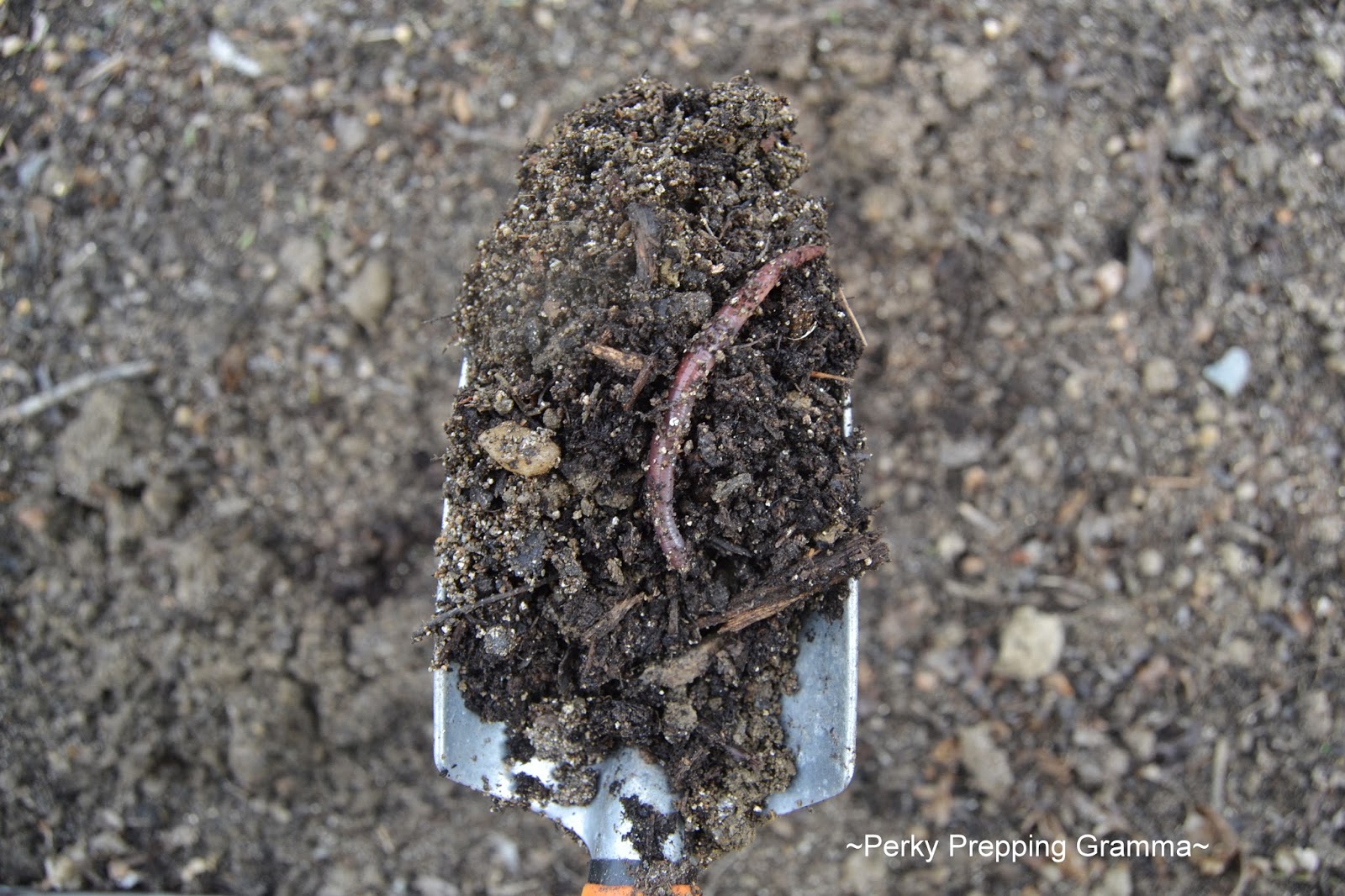
Living in Northern Virginia our soil is heavy with red clay. This is a picture of what our soil normally looks like & a picture of soil from my garden today after one year of preparing the soil by the Back to Eden method.     


Pretty amazing, right? Note the worm...I had worms all over my garden..The earthworms help increase the fertility of your soil. They burrow through the soil ingesting and digesting the unbroken down organic material that is in the soil.Their waste (worm poo) provide vital nutrients for the soil. As they move through the earth it creates an aeration effect, which helps surface water penetrate further into the soil. 
This is so simple to do & more importantly very easy to maintain. I simply use a rake occasionally to uproot whatever weeds may pop up.
The "Square Foot Gardening" method, helps maximize the spacing of your planting as opposed to traditional rows. 
So we (when I say we here, I really mean that Mr. Perky nicely asked me to just leave him alone and let him get 'er done) are finally getting tour garden this year & I am so excited to see my plants starting to poke their little heads up out of the ground. We actually had top soil, compost and mulch delivered and as you see Mr. Perky had several little helpers.


This is how it looks layered. This is my friend helping me plant some seeds.

For the seeds, I have chosen to use only non-hybrid and non-GMO seeds. While there are several great companies out there, I have chosen to use Baker Creek Heirloom Seeds, which was recommended to me. I also have seeds that I have saved. 

Now the why? I feel it is really important to practice your skills before you have to use them. I hadn't really gardened before, so I am learning as I go. This way I will have hands on knowledge BEFORE I really need to depend on gardening. Plus, I have learned I really enjoy this as a past time.

I encourage you to start your garden if you haven't tried it yet. Now, take the time to watch the "Back to Eden" film. it is well worth your time. 

What I do here is simply share our preparedness journey. If you liked this post we would love it if you joined our Perky Prepping Gramma community on Facebook, comment or share. Plus it would just make my day.
Your order, any order is so very appreciated, because anything ordered through my Amazon Associate links helps me to be able to stay home and write for you. Perky Prepping Gramma is a participant in the Amazon Services LLC Associates Program, an affiliate advertising program designed to provide a means for sites to earn advertising fees by advertising and linking to Amazon.com.


Saturday, May 10, 2014

April Review

I am a little late in showing you what I accomplished in April. But, here it is:
Canned bacon (36 pounds of Zaycon bacon in quart jars) and corned beef (9 quarts)

 
Dehydrated mushrooms & blueberries (got some more free ones from work), vacuum sealed these items.


Always more coffee to store
Added more chocolate &stored more eggs


Plus, I gave away several days of food to a local homeless shelter that takes care of and helps reestablish families in our community. I love that when there is a need, I just go “shopping” in my store!
You are able to find more details on any of these pictures by scrolling back through this months photos on my facebook page.
I am pretty amazed considering this month I injured my back, had to deal with the heart stuff again (currently wearing an event monitor) and spent three days in the hospital for a kidney infection and kidney stones. 
My May goals are Meat & BOB again. I am still working on getting my freezer completely empty of meat, that will take me awhile. Plus, we are still working on revamping our BOB's.
Actually we are revamping our supplies into "get home bags" and "bug out bags". 
Care to share what you have been doing?

Thursday, May 8, 2014

Bugging In Vs. Bugging Out

Whether you plan on bugging out or bugging in, is a different thought process and depends on what plan seems to work for you. The reason I am addressing this is that I recognize that not everyone will have the option of securing a bug out location. Bugging in or out depends on where you are currently located.

For our situation, we had a bug out location available for us from the beginning. So we have planned on two levels the entire time.
We currently live in a high density, sprawling suburban setting. Our first big goal was to establish and secure our current home in case of an emergency. That has included water storage, food supplies, non electric back up for living, all our medical preps and defense.
Depending on the situation, we could survive on what we have here at home for some time.
It may be lean depending on the time of year, but we are also prepared to ramp up to full on gardening. Our biggest issue for a continued long term bugging in would be to secure something for protein (i.e. chickens) to grow when we have used our stored pressured canned meat. That is one of the reasons I continue to pressure can meat monthly. But, that will change as soon as we move, for then we are able to start having animals.
We are currently updating our get home bags, which we normally carry in our vehicles at all times.
One of the things we don't plan on is to just leave and go “into the woods”. That so wouldn't work in our area. We would have to travel many, many miles to be secure. Plus, because of the density of the surrounding population I consider that to be throwing ourselves into a life threatening situation. We have a destination if we need to evacuate.

If there was an extreme emergency, we are prepared to leave most everything behind and grab our pets and our larger bug out bags (which DH is is rebuilding currently) at a moments notice. Items & bags are prioritized based on how much time we think we will have. If we were to bug out, the priority will be moving what we specialize in providing for our team.
What is interesting for me is even before we prepared and even though our children do not prepare...we (they) have always had a plan on what to do when and where. I believe that plan started with 9-11 and the D.C. sniper situation, since we live close to D.C.
Our location that we consider our bug out location is fully functionally to maintain ongoing food production, water etc. Almost everyone on our team has specific knowledge that we bring to the table. Though I don't talk about this often, DH has our back covered when it comes to items for defense.

The next step; as you know we are currently looking at property further away from the city. I look forward to the day when we are able to establish ourselves in a more self sufficient environment. Then a new journey will begin.

Here is a fantastic article on the very same subject, with a lot more details. On the Survivalist Blog, 


What are your plans that work for you and our family?